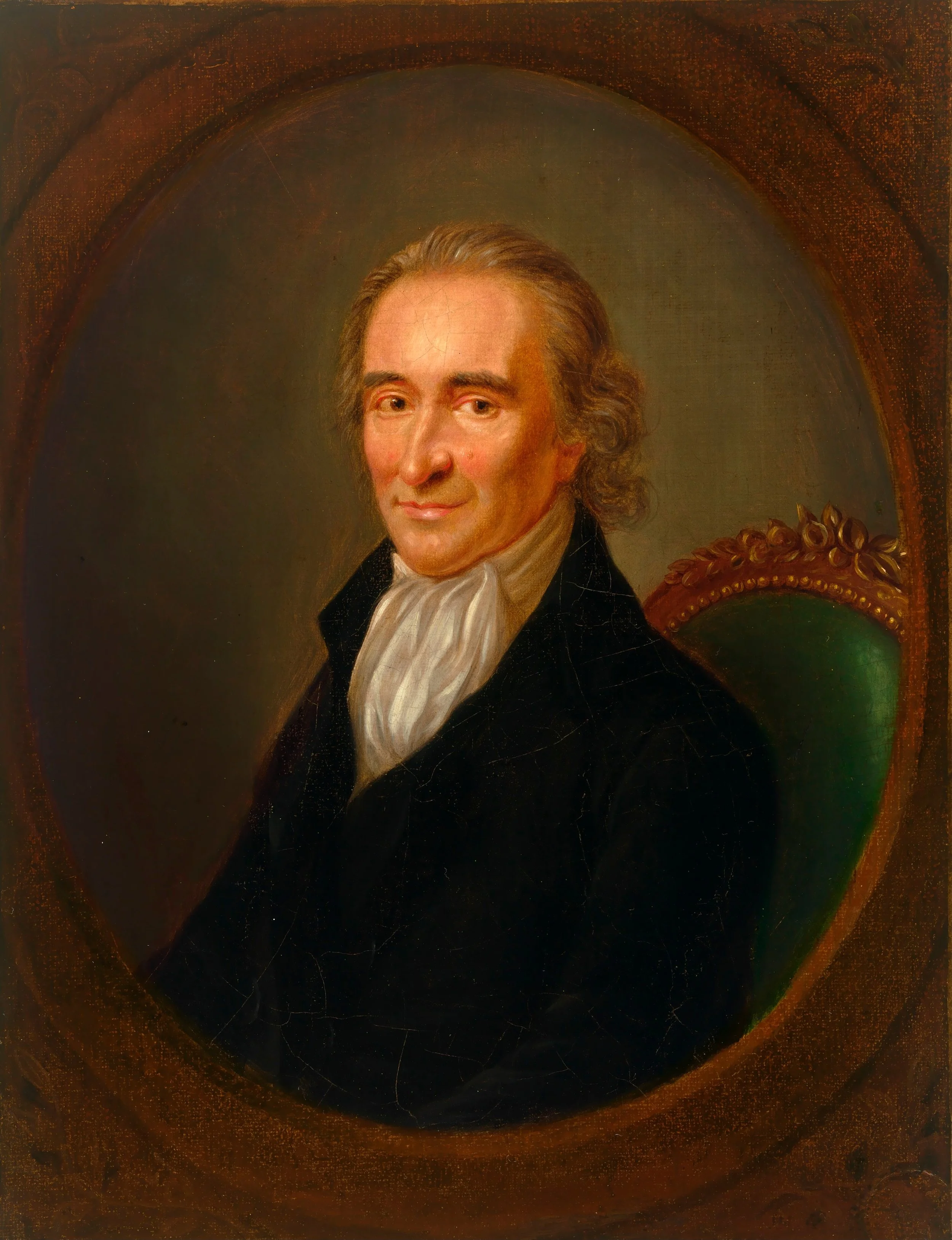
Portrait of Thomas Paine by Laurent Dabos
On January 23, 1783, a beleaguered Thomas Paine wrote from a residence in Providence, Rhode Island to Robert Morris in New York:
“I find that the persons who are at the Head of the opposition in this Town are endeavoring to prevent the publication of any more of my pieces. They set out with claiming the privilege and freedom of the press and now want to suppress it.[i]”
But why was the famous writer of Common Sense in Providence, and why were there some who wanted Thomas Paine driven from town?
The author had been secretly employed since February 1782 with a small stipend supplied by Wahington, Robert Morris, and Robert Livingston[ii] from government funds to write articles “informing the People and rousing them into action” on the need for higher taxes to support the war effort[iii].
Paine had in fact, written to Morris the month before, assuaging the morale of officers, and reporting that they had requested he draw up a petition to Washington respecting their pay, adding that
I entered into some conversation with them on the subject by mentioning-that the state of the Treasury was now improving-That the Taxes laid this year were real and valuable and that any necessary demands just now might rather injure than promote their interest.[iv]
Paine added that he wished to oblige them with some promise. He believed that they did not demand payment all at once, but that “the payment of the interest will satisfy them for the present…”
Writing again to Morris on February 20, 1782, Thomas Paine reflected upon his own sacrifices. The author had originally enlisted as an aide to General Nathanael Greene but proved inept in the field. He was better suited as a messenger and diplomatic aide having recently returned from Paris as an unpaid secretary to Rep. John Laurens during loan negotiations:
It is upwards of seven years since I came to America, and above six since I published ‘Common Sense’. My situation from the time of my becoming a public man has been exceedingly inconvenient, and nothing but the purest attachment to, and a natural affection for, a cause which I knew and felt to be right, and in which I found I could be useful, could have held me so long and so invariably under such difficult circumstances; yet these I have carefully and constantly concealed, because it could answer no service to the interest of America to represent her under the character of ingratitude.[v]
All of America was hurting from the sacrifices given during the eight-year long War of Independence. Among those states holding out against ratification of any impost from the Federal government was it’s smallest state, Rhode Island.
The Continental Congress had first proposed an impost tax by suggesting an amendment to the Articles of Confederation in May 1781. Such an amendment would allow the body to impose a five percent duty or tax on foreign imports. States were slow to respond to the request for ratification.
The present Rhode Island delegates James Mitchell Varnum, William Ellery and John Mowry all supported the additional article, and moreover, a stronger Federal government than many of their constituents would like.
By August, having barely a response from the States, delegates Varnum and Mowry wrote in dismay to Governor Greene:
“We are at a loss to conjecture the rumors which have induced the state of Rhode Island to delay complying with the requisition of Congress respecting the five per cent duty…”[vi]
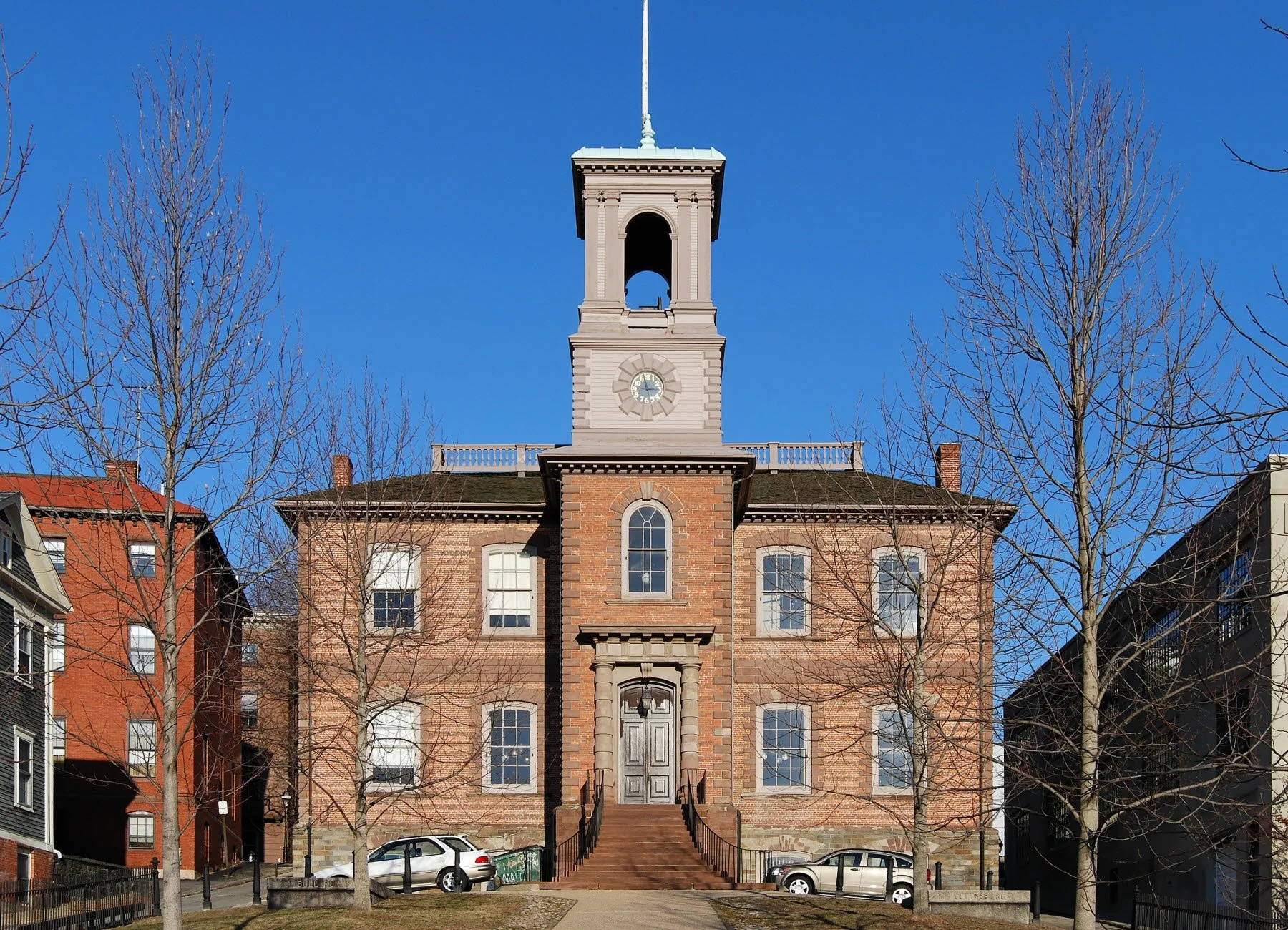
Providence’s Old Colony House where the General Assembly sat.
In October of 1781, Governor Greene wrote to the new Superintendent of Finance, Robert Morris that Rhode Island had already given its share of cost during the Revolution, and that the legislature was understandably cautious about the impost, as “at present we are unable to determine upon the utility of that measure, as the revenue arising therefrom, within this little state would not be worth collecting.” Greene promised to “wait until our sister states have adopted the same….”[vii]
This, of course, only delayed a vote and stirred further debate on the issue. At the close of 1781 James Mitchell Varnum returned home to East Greenwich with the purpose of working toward the passage of the impost. The time at home to read and write produced a series of attacks back and forth by Varnum, whose epistles in the Providence Gazette were signed as “Citizen” and State legislator David Howell, one of Varnum’s old classmates and friend, whose scathing rebukes of the arguments for a Federal tax were signed using several names, including “A Freeman” and “A Farmer.”
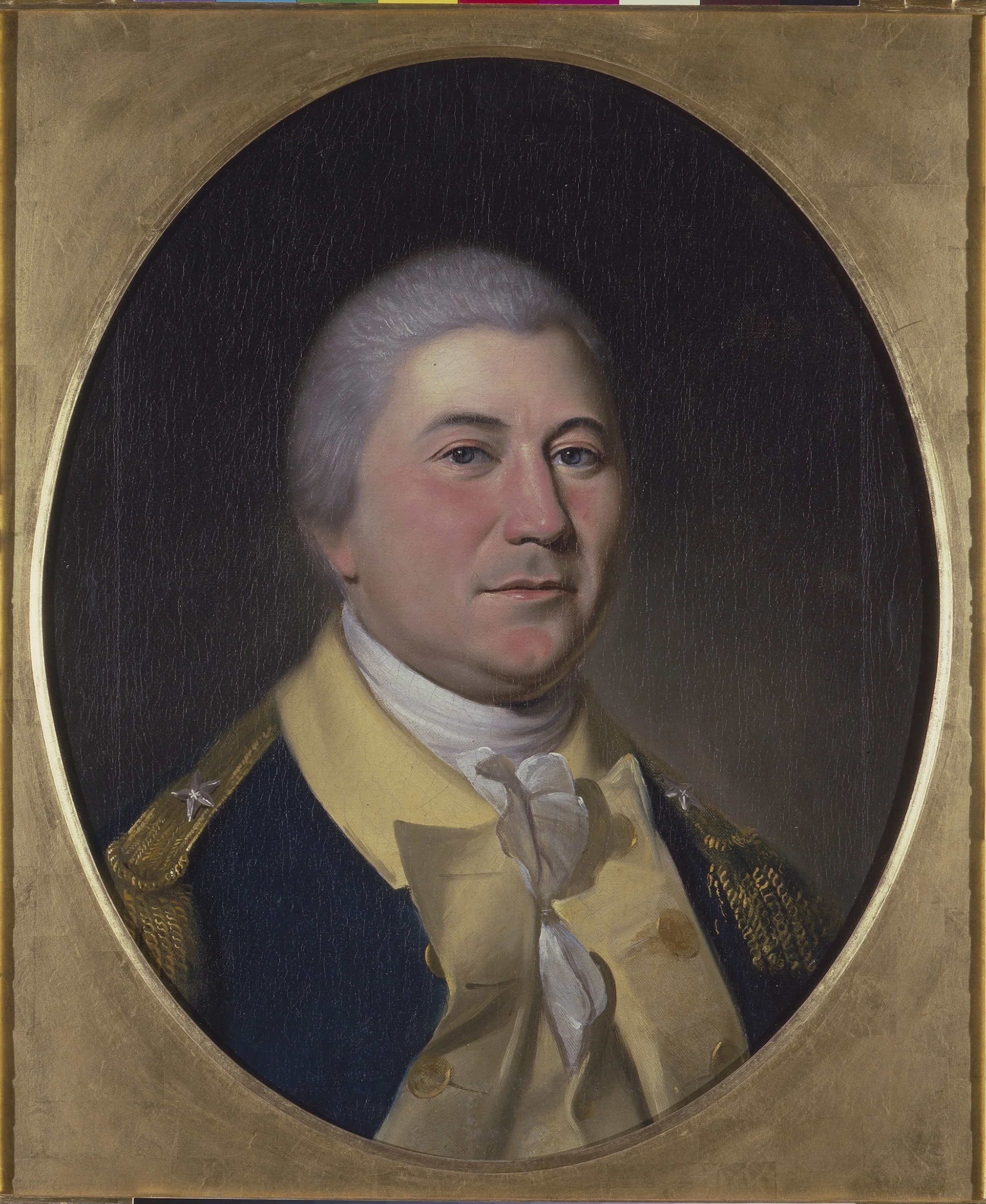
Portrait of Brigadier-General James Mitchell Varnum by Charles Wilson Peale
Throughout the month of March 1782, Varnum blizzarded the Providence Gazette with articles on the impost. Emphasizing the need of a stable revenue to end the war, he saw the successful end of the conflict as the beginning of a new nation, not just a union of thirteen separate colonies, but a singular nation under a Continental Congress, with the Declaration of Independence as its foundation.
In his first column as “A Citizen”, Varnum acknowledged his disagreement with those constituents who had elected him out of office, but wrote in his defense that while,
“It is a generally received maxim, that, “the voice of the people is the voice of God,” or, in other words, that what the people in general think right is so, If this maxim be confined to the original feelings of human nature, unbiased by habitual or momentary prejudices, no man in a free government will dispute its propriety. But when the opinion of the majority is founded on mistaken representations of fact, or is the result of undue persuasion or force, the maxim cannot be applied.”[viii]
In a later missive, Varnum appealed to those who protested a “Federal tax” by tariff:
“…this revenue will but apply to the five percent duty required upon importation and prize goods; if it shall appear that this duty will be easily collected, that its operation will be beneficial to all, and greatly relieve the poor from their present burthens…”
And in his letter published on 30 March 1782, he asked readers to consider the consequences of leaving the union financially rudderless:
“What then remains for the United States? With… a permanent though small revenue they can put a glorious period to the war, and… the blessings of peace through a distressed land. Without it, the burthens upon the people will be more oppressive and they must sink under them!
What will be the consequences? An internal revolution, a change of government, a military system, or a subjugation to Great Britain. Humanity (?) at the idea, and Heaven will surely incline our Hearts to those measures which will prevent such dreadful calamities.”[ix]
By the close of that year, Varnum, Ellery and Mowry had been elected out of office and replaced by representatives less favorable to an impost. Thomas Paine was then among those recruited to carry on the fight in letters, speeches, and written dispatches to the country’s many newspapers.
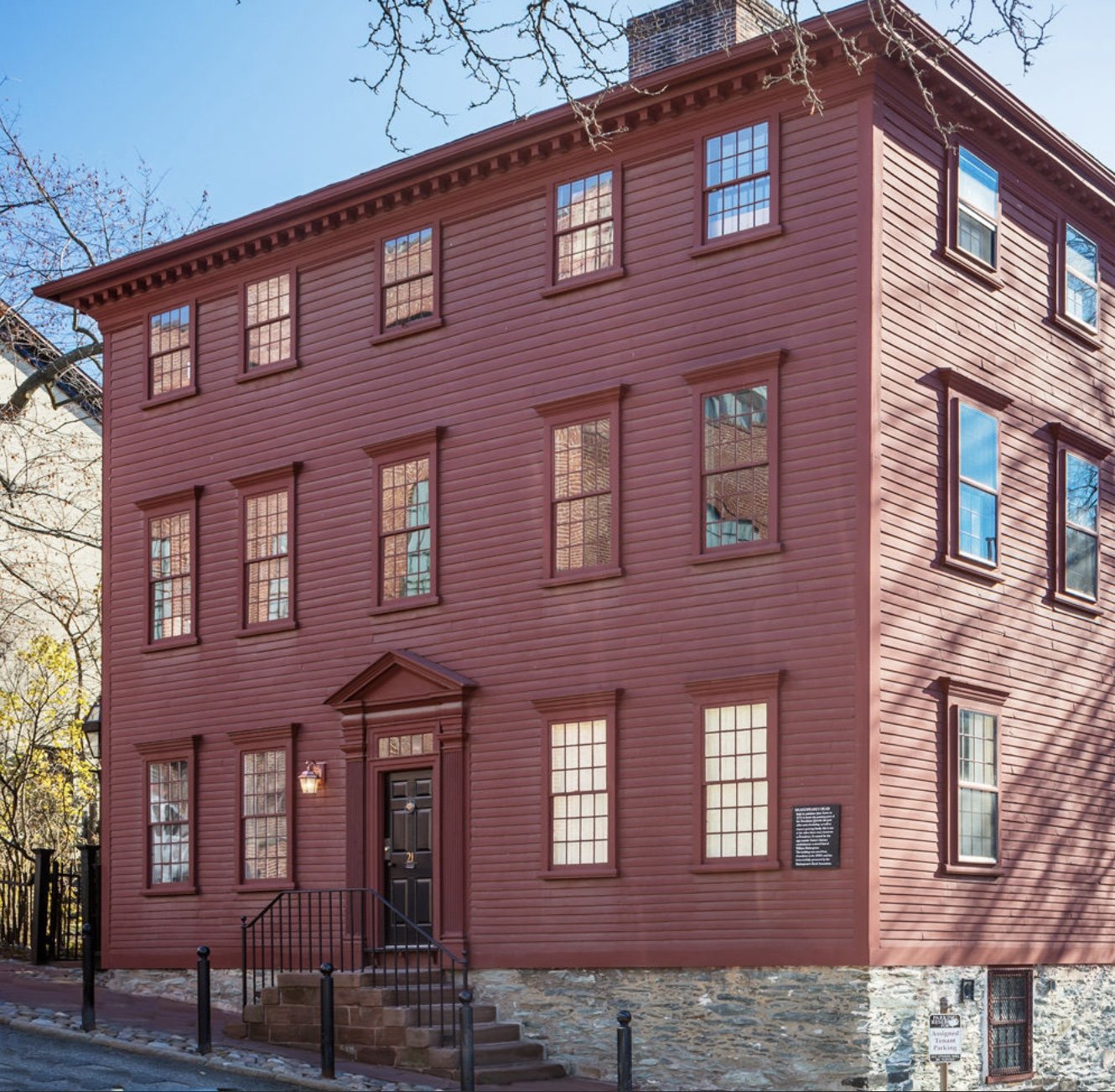
“Shakespeare’s Head”, the building that housed the Providence Gazette
Paine was in Rhode Island’s capital city, writing to the Providence Gazette in a renewed effort to persuade the populace and the state’s legislature to ratify the federal impost proposed to help cover the cost of the war, including the debt to France. Paine wrote a series of letters during his time in the city, signing them as “A Friend to Rhode Island and the Union.”
His first was sent from Philadelphia on November 27, 1782 to “the printer of the Providence Gazette.” The printer then was John Carter at his address close to the State House called “Shakespeare’s Head.” The letter informed Carter of a piece published in a local newspaper which was enclosed and signed “A Friend of Rhode Island and the Union.” Paine requested that he insert the piece in a coming edition, and cautioned:
I am concerned that Rhode Island should make it necessary to address a piece to her, on a subject which the rest of the states are agreed in.
At the time of Thomas Paine’s taking up the cause of the impost, Rhode Island was one of a handful of states holding out on ratification. While the call during the revolution may have been “no taxation without representation, Rhode Islanders seem to beholden the belief of no taxation from a federal government at all.
Thomas Paine’s first letter reminds readers that the laying a duty of five percent on foreign goods is but
to be applied towards discharging the interest and principal of the debts which are or may be contracted by the United States (of which Rhode-Island is one) for the defence of the country, and for supporting and establishing the Independence thereof.[x]
He reprints word for word, the Act proposed by Congress[xi] for the reader and lays out the language in simpler terms to reinforce the purpose, manner, and time for which the duty would be applied.
He then assesses the Rhode Islanders stubborn independence as a general mistrust of government, and in less flattering terms, a general ignorance born of their simplicity:
The Citizen of Rhode-Island, in objection to the five per cent. duty, begins his argument at a very remote point from the subject. He sets out with obliquely traducing the character of all government whatever. His positions are loose and general, and by endeavuoring to make them apply to every thing, they apply directly to nothing. He speaks of executive power, as if it were something existing in its own right, perpetual in itself, and neither constituted by, nor controulable by the people. He confounds all kinds of government together; and that without perceiving, that the same kind of reasoning, which is applicable in one case, is foreign to the purpose in another.
It is somewhat strange that the theory of government, which is exceedingly simple in itself, and in general well known by almost every farmer in America, should be so perplexed, misconceived and tortured, by those whose very business and duty it is to understand it fully, and exercise it justly.[xii]
In this, and later missives, Paine addressed directly a writer who signed his objections to the impost as “A Citizen of Rhode Island.” The author who penned such letters was unmoved by Paine’s argument. As with earlier arguments, this “citizen” felt that the Federal demand for taxes was taking away the States autonomy and control over its own revenue and oversight. The writer was particularly rankled by outside interference such as Paine’s, to pressure state’s into ratification.
The writer of ‘Common Sense” attempted a softer approach in his second letter at persuading this and other citizens:
It is a great convenience to a State to be situated so near the water, as to be eased of the expence of land carriage for foreign goods. This alone is far more than the duty of five per cent. and persons so conveniently circumstanced should, of all people, be the last to object.
Rhode-Island, by her situation, enjoys some superior benefits in the union. Closely connected with the sea, she derives advantages under its flag, its commissions and pass ports, which the inhabitants of more remote places do not; and many reasons will, upon reflection, occur to shew, that her objections are not only wrongly founded, but wrongly judged of.
Paine argues that any union must be a union of all:
What would the sovereignty of any one individual State be, if left to itself, to contend with a foreign power? It is on our united sovereignty, that our greatness and safety, and the security of our foreign commerce, rest. This united sovereignty then must be something more than a name, and requires to be as compleatly organized for the line it is to act in as that of any individual State, and, if any thing, more so, because more depends on it.
Every man in America stands in a two-fold order of citizenship. He is a citizen of the State he lives in, and of the United States; and without justly and truly supporting his citizenship in the latter, he will inevitably sacrifice the former.
By his third letter, Paine’s impatience begins to rise to the surface:
Never was a subject, simple and easy in itself (and which needed nothing but plain and temperate argument, if it needed any) more hideously tortured, and willfully misrepresented, than by those who have wrote against the five per cent. duty. Yet none of them have proposed a better or more eligible and practicable method of supporting public credit, and supplying the exigencies of the States.
In December 1782, Paine had arrived in Providence to better respond to the debate on the impost which continued unabated. He kept a low profile, staying at a “Mr. Lot’s” house in town. It was, perhaps to his benefit that while thousands of readers knew his words, only a handful of Americans had ever met him or seen a likeness, but for the occasional caricature printed in newspapers. Paine’s letters while in Providence were published by the Gazette on January 4, 11th, and 18th; and again on February 1, 1783.[xiii]
In the disarray of political life after Independence was gained, there were some who viewed Paine as a “metaphysical reformer… who care[s] not, when in pursuit of their theories, whose heart they rend, whose property they waste, whose safety they endanger.[xiv]”
According to Paine’s critic, the crisis of paper money was one of Congresses own making:
“In five years, the Congress issued about twelve million sterling, in dollars of pasteboard…they made their pasteboard a legal payment of every debt, though they were of no more value than the almanacks of the last year. The fraudulent were thus enabled to pay their just debts with waste paper. The rich were thereby defrauded, but the poor were not enriched. All property and all labor were depreciated by the same stroke of fraud. A transaction which so violently shook the interest and the happiness of a country, has seldom occurred before.[xv]”
The critic argued that through his series of Crisis pamphlets since 1780, Paine had simply regurgitated the same propaganda that had failed the people:
But their ears were callous to the voice of the charmer. The pen had…ceased to influence, during the clamor of contention, the intrigues of cabal, and the difficulties of war. While the American citizens denied supplies to the cries of Congress, they sullenly determined, to suffer the miseries of hostility, till the acknowledgement of Independence should make them happy. Our author cheered them from time to time with another Crisis, till his Crisis, becoming common, was no longer a Crisis, and was therefore read without attention, and thrown away without efficacy.[xvi]”
While still esteemed among the Founders, by the time of his letter to Robert Morris, his writings and presence in the city of Providence had found a less than friendly reception:
This makes my fourth letter without receiving a line from you in answer to my first letter from Mr. Lots which disappointment will put me to a good deal of difficulty.
Enclosed is my last piece, and as I find the Commissioners are not coming forward I begin to have thoughts of returning, otherwise I should have waited to accompany them back.
There is one idea which occurs very strongly to me, which will finally show the extreme ill-policy of Rhode Island. The fisheries, in all probability will be the last and most difficult point to settle in a negotiation, and yet this foolish state which has so great a dependence on them is creating a necessity for closing with the best terms of peace that can be first obtained.
Nonplussed, Paine would comment in the last of these that “…while I enjoy the high esteem and opinion of good and great men, I am perfectly unconcerned at the mean and snarling ingratitude of little incendiaries. I…refer my reader to my five letters already published in the Providence Gazette, on the five per cent Duty, and more particularly to the last number.[xvii]”
In his last missive to the paper, Paine implores
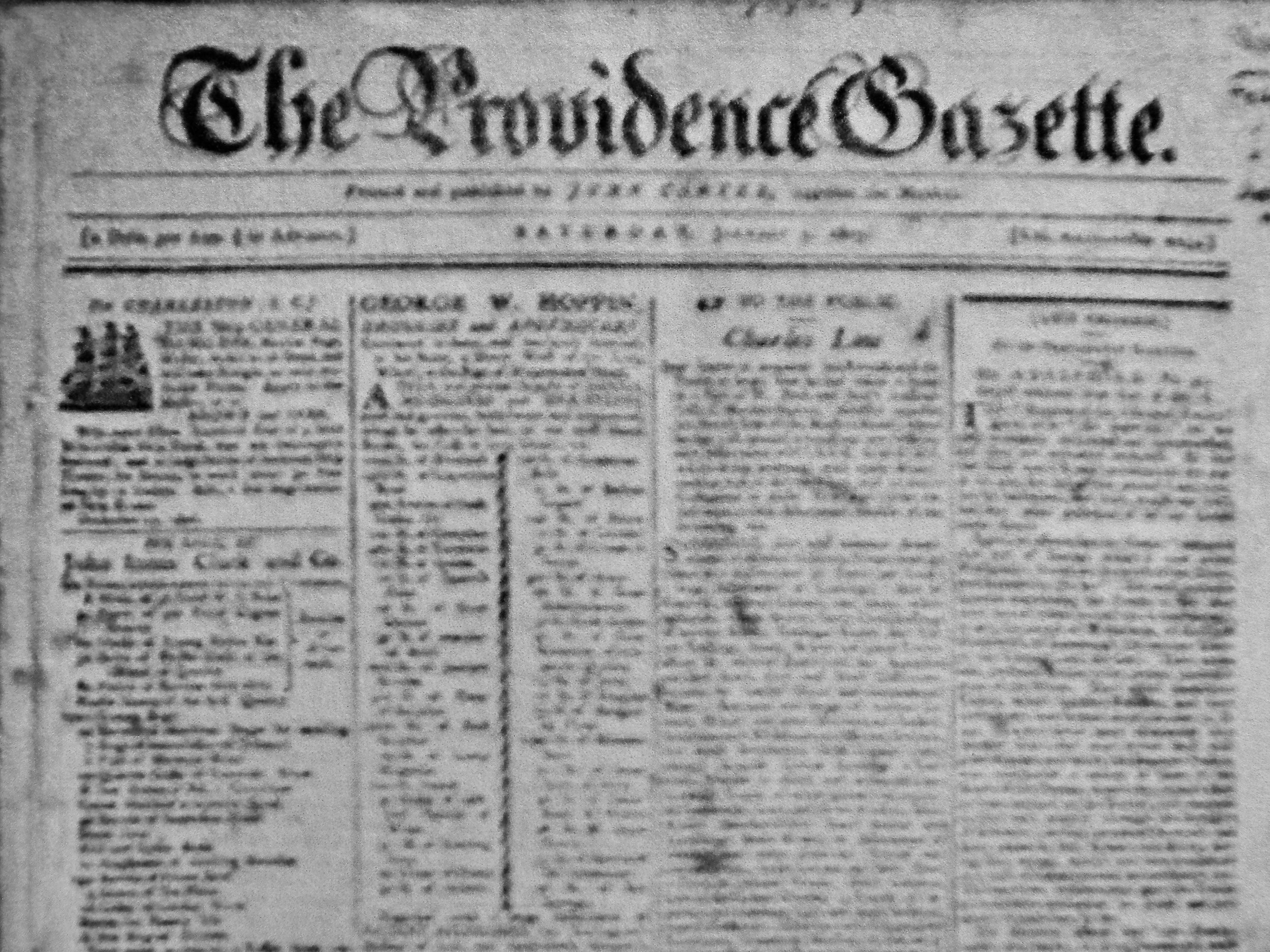
An image of the newspaper, courtesy of Wikipedia Commons
I wish all those who are at the head of this opposition in the State of Rhode-Island, and who are building up a false popularity, by censuring Congress, would act as honestly a Congress have done, and learn to feel for others as well as for themselves.
Had the enemy succeeded in conquering America, the taxes upon commerce would have been an amazing deal more than five per cent. The conquered could not have expected to have been better off than the conquerors; and the most favorable terms that could have been looked for, would have been to pay no more taxes than what the people of England pay… I have quoted them from Burn’s Justice of the Peace, a book which is in several gentlemen’s hands in this country, and likewise in Providence.[xviii]
Rhode Island continued to resist any persuasion towards passing the impost tax. Reports to Congress in March and April of 1783 showed that nine states had passed the resolution with Rhode Island still standing in opposition.[xix]
As noted,
“The failure of the Impost of 1783 had a profound impact on the constitutional history of the United States. Had the Impost been accepted and implemented, the Articles of Confederation might have continued to function evolving into a stronger parliamentary system of government and the Constitutional Convention probably would not have been called.[xx]”
Even as late as 1955. Thomas Paine was stirring controversy in Rhode Island. A newspaper article in the Providence Journal of September 23, 1955 reported that
“These may not be "times that try men's souls" as the pamphleteer wrote in Revolutionary days. But in these times of ideological conflict, Paine is proving very trying to the Mayor of Providence, R. I., and Robert Lewis. Mr. Lewis, secretary of the Thomas Paine Foundation with national headquarters here, wanted to help Providence get a $75,000 statue of Paine. But Mayor Walter H. Reynolds has spurned the offer. "It's out of the question," he said, “because Paine was and remains so controversial a character." Mr. Lewis has proposed that if Providence provided the site the foundation would provide the statue in tribute to the man who wrote the stirring Revolutionary tract, “The Crisis." Paine certainly was a controversial figure in his day. But Mr. Lewis acclaimed his patriotism. "Bigoted, arrogant and ignorant political influences were brought to bear to prevent the erection of the statue," he said. "Paine wrote the first draft of the Declaration of Independence, and the man who wrote that can't be 'so controversial' for this country. He was the foremost patriot of his time and belongs among the Founding Fathers.”
The organization is still making the effort to have a statue of Thomas Paine raised in Washington, D.C. to compliment monuments already in New Rochelle, New York, and Morristown, New Jersey. No efforts have been made since to place one in Providence, or to commemorate his visit to the State. Still, Thomas Paine’s words continue to be quoted and used as inspiration from many across the aisles of the political divide, but as with politicians of his own time, they strenuously avoid any mention of taxation.
[i] Papers of Robert Morris, Vol. VII., page 359
[ii] See Agreement with Robert R. Livingston and George Washington, 10 February, 1782, Morris Papers, Vol IV, p. 201
[iii] Richard K. Showman, The Papers of General Nathanael Greene Vol. IX, p. 588n
[iv] Letter from Thomas Paine to Robert Morris, January 24, 1782. National Archives. See https://thomaspaine.org/letters/to-honorable-robert-morris-esq-january-24-1782/
[v] Letter from Thomas Paine to Robert Morris, February 20, 1782. National Archives. See https://thomaspaine.org/letters/to-robert-morris-february-20-1782/
[vi] Bates, Frank Greene, Rhode Island and the Formation of the Union Studies in History, Economics, and Public Law Vol. X No. 2 p. 75
[vii] Robert A. Geake A Man of Uncommon Valor: James Mitchell Varnum, the American Revolution, and the Foundation of the New Republic (Middletown, Stonetower Press 2026) p. 140
[viii] RIHS Robinson Research Library, Microfilm of The Providence Gazette, March 2, 1782
[ix] RIHS Robinson Research Library, Microfilm of The Providence Gazette May 30, 1782
[x] Thomas Paine to THE PRINTER OF THE PROVIDENCE GAZETTE, November 27, 1782. Six Letters to Rhode Island, see: https://thomaspaine.org/essays/american-politics-and-government/six-letters-to-rhode-island/
[xi] “In CONGRESS, February 3, 1781.
“Resolved, That it be recommended to the several States, as indispensably necessary, that they vest a power in Congress to levy, for the use of the United States, a duty of five per cent. ad valorem, at the time and place of importation, upon all goods, wares and merchandize, of foreign growth and manufactures, which may be imported into any of the said States, after the 1st day of May, 1781; except arms, ammunition, cloathing, and other articles imported on account of the United States, or any of them, and except wool cards, and cotton cards, and wire for making them, and also except salt during the war: Also a duty of five per cent. on all prizes and prize goods, condemned in the Court of Admiralty of any of these States, as lawful prizes.
“That the monies arising from these duties be appropriated to the discharge of the principal and interest of the debts already contracted, or which may be contracted, on the faith of the United States, for supporting the present war. — That the said duties be continued, until the said debts shall be fully and faithfully discharged.”
[xii] Letter of Thomas Paine…November 27, 1782 Six Letters to Rhode Island, see: https://thomaspaine.org/essays/american-politics-and-government/six-letters-to-rhode-island/
[xiii] Ibid.
[xiv] Francis Oldys The Life of Thomas Paine, the Author of Rights of Man, age of Reason &c. with A Defense of His Writings (Boston, Manning & Loring, 1796) p. 24. Oldys would prove to be critical of enlightenment thinkers, or “metaphysical reformers” , describing the American Revolution as “a happy influence of what may be done by metaphysical reformers , who run furiously forward, in pursuit of their theories, without regarding the end.
[xv] Ibid., p. 23
[xvi] Francis Oldys The Life of Thomas Paine, the Author of Rights of Man, age of Reason &c. with A Defense of His Writings Boston, Manning & Loring, 1796 p. 21
[xvii] Richard K. Showman, The Papers of Nathanael Greene Vol. XII, p. 206
[xviii] A not too subtle dig at the lawyers among Rhode Island’s legislature who, though far removed from the Agrarian party who objected strenuously against the impost; took their positions for political expediency.
[xix] America’s First Federal Tariff: The imposts of 1781 and 1783 Center for the Study of the American Constitution. See: https://csac.history.wisc.edu/2025/04/08/americas-first-proposed-federal-tariff-the-imposts-of-1781-and-1783/
[xx] Ibid.