2026 events
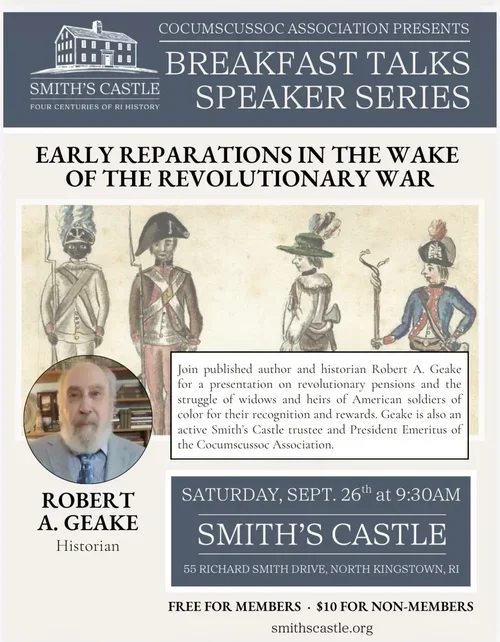
Music on the meadow
July 19th 430-630pm
Another Summer Evening on the Meadow
When the music started at our first Music on the Meadow event, we knew we had something special.
Families spread out across the lawn on their blankets and lawn chairs. Guests arrived carrying everything from simple picnic baskets to elaborate charcuterie boards worthy of a magazine cover and of course...dancing to live music.
Now we’re doing it again.
Join us for an evening with the South County Revival, a talented local group whose music is perfectly suited to a summer evening beneath the trees at Smith’s Castle. Bring a picnic, gather your friends, and make the space your own. Whether you come with a gourmet spread or a simple sandwich, you’ll find yourself surrounded by good music, beautiful scenery, and the kind of relaxed community spirit that makes summer in Rhode Island so memorable.
The Castle has been bringing people together for centuries. For one more evening, we’ll add music to the story.
Buy tickets here!
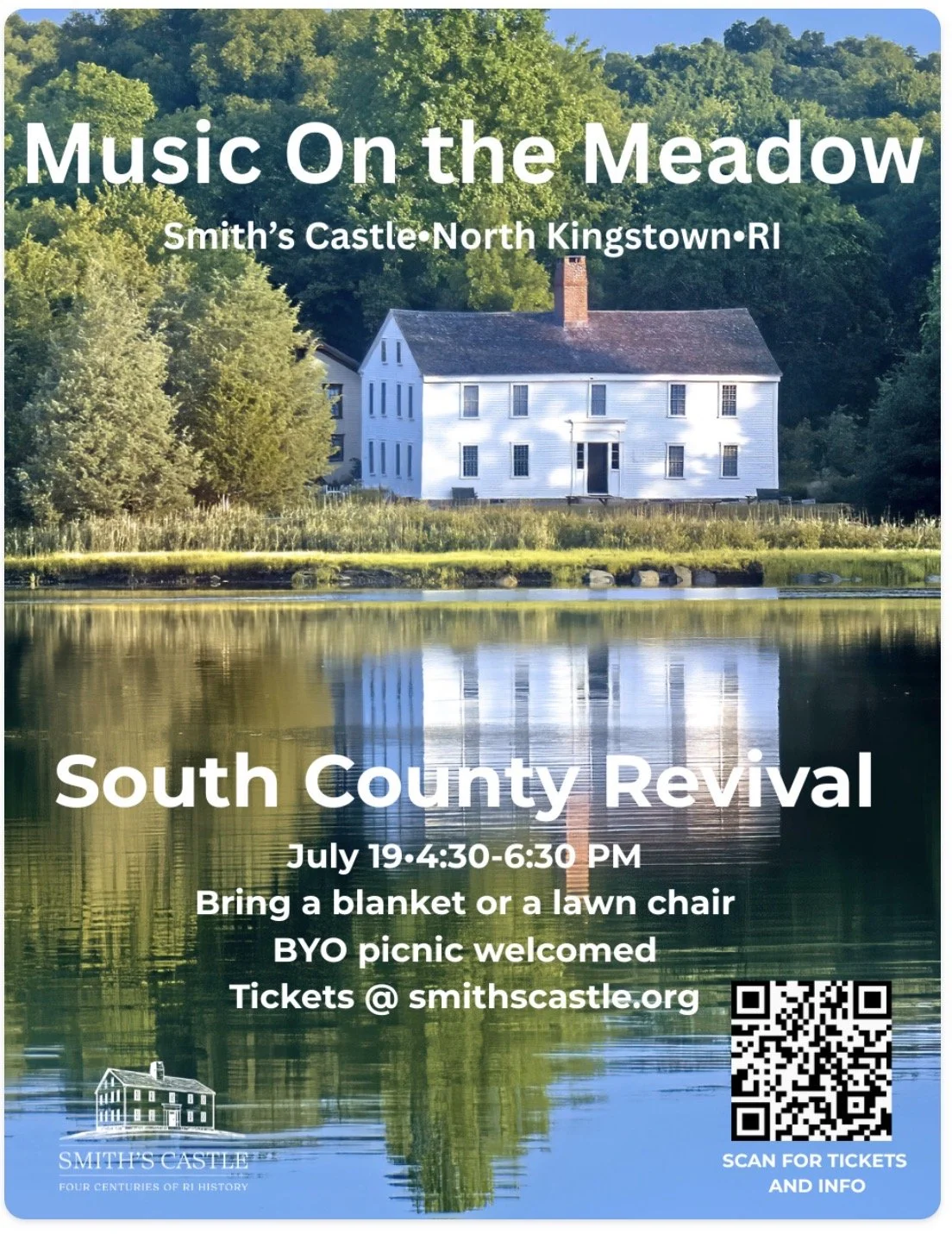
breakfast talk
Sat. Sept. 12th 9:30 a.m.
Rhode Island State Historian Keith Stokes talks about the African-American response to the onset of Revolution, and the oral history and cultures kept alive despite the upheavals. How did the enslaved feel about the phrase “All Men Are Created Equal?” Come join Keith for a talk about the African American response to the onset of the Revolution, the oral history, and the cultures that kept this “unwritten” history alive, despite the upheavals and deliberate attempts at erasure.
See Breakfast Talk Page for more details.
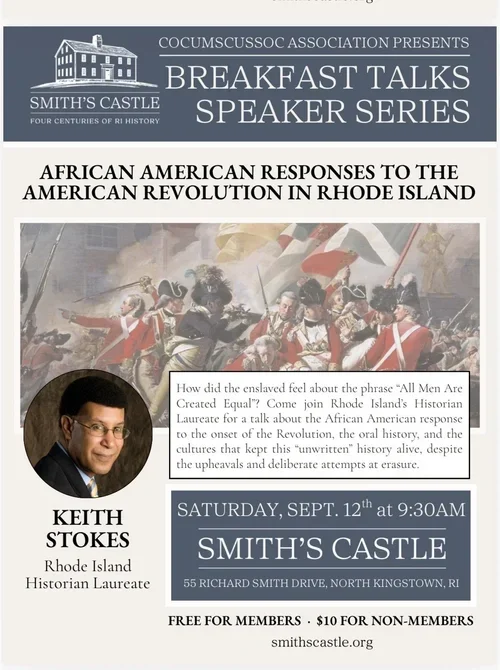
Conversations at the castle
Tuesday September 15th at 6pm
East Greenwhich in the American Revolution
Matt Carcieri East Greenwich Historian gives a talk on East Greenwich’s response to the American Revolution. Through a focus specifically on the events of 1775 in to 1776, the talk will reveal the daily experiences of the residents of East Greenwich and the Revolutionary Rhode Island in the early years of the conflict.
See Conversations at the Castle Page for more details.
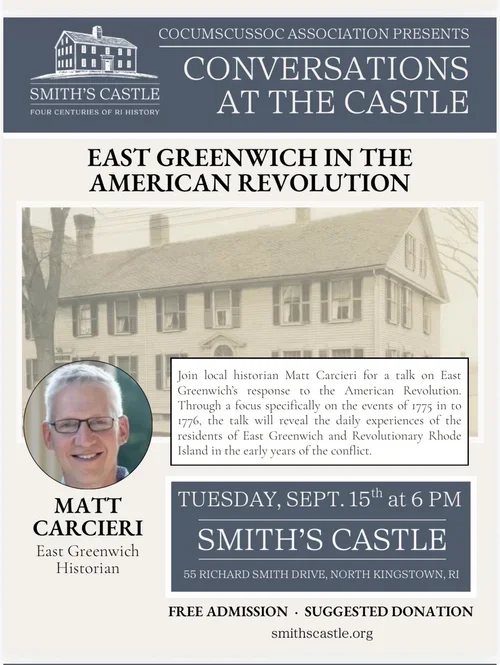
Breakfast talk
Sat. Sept 26th 9:30 a.m.
Historian Robert A. Geake will offer a presentation entitled “Early Reparations in the Wake of the Revolutionary War: The Struggle for Widows and Heirs of Patriots of Color for Recognition and Reward.”
See Breakfast Talk Page fore more details.