
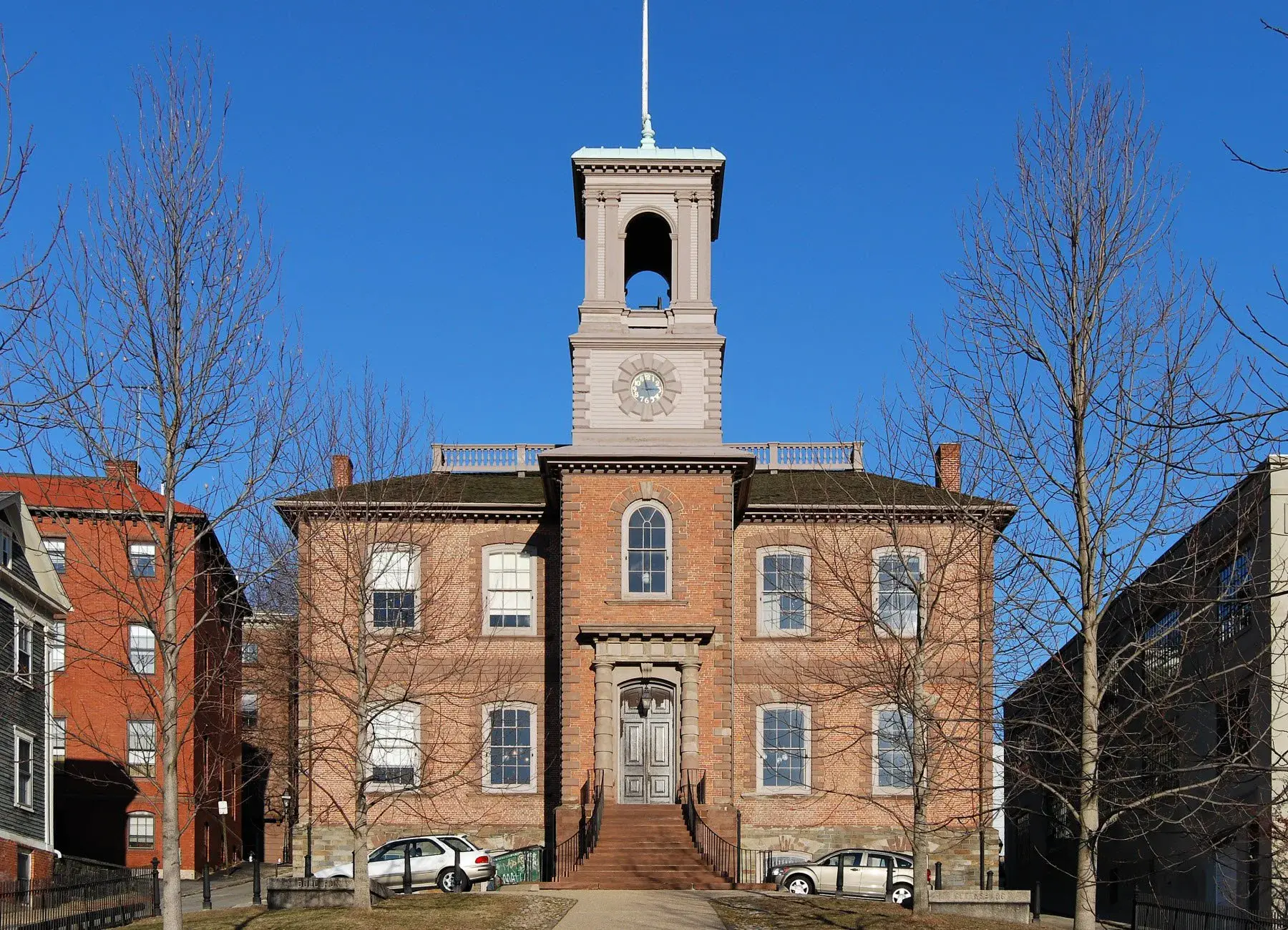
Old Rhode Island State House where the Assembly met, Providence.
On May 4th of 1776, two months before the Declaration ff Independence was signed in Philadelphia, an act passed the RI General Assembly REVOKING any prior official expression of allegiance to King George III. RI was the first colony to do this. It was not a formal severing of all ties and declaring Independence as they would join the other colonies in doing on July 4th, 1776.
One striking thing between those two documents is a very similar deliberate omission of a single word that represented an entire way of life vital to all the colonies in one way or another: “enslavement” or “slavery”.
The first paragraph of the RI Act is simply a title for the bill, longer than mine for this essay. It’s the second paragraph that interests us – we can read what the words are but they have been lined out. An old RI practice in its law making procedures allowing us to later see what was being changed by the new law.. The whole paragraph is lined out. If you compare that paragraph with the last paragraph of the body of the act, you will see that it has been duplicated in part and better written in parts. But there is something missing.
In that lined out 2nd paragraph there is this phrase among the others calling out King George III: that as a bad king he was compelling Rhode Islanders “to submit to the most debasing and detestable Slavery.” Somehow, that did not survive the rewriting of that paragraph.
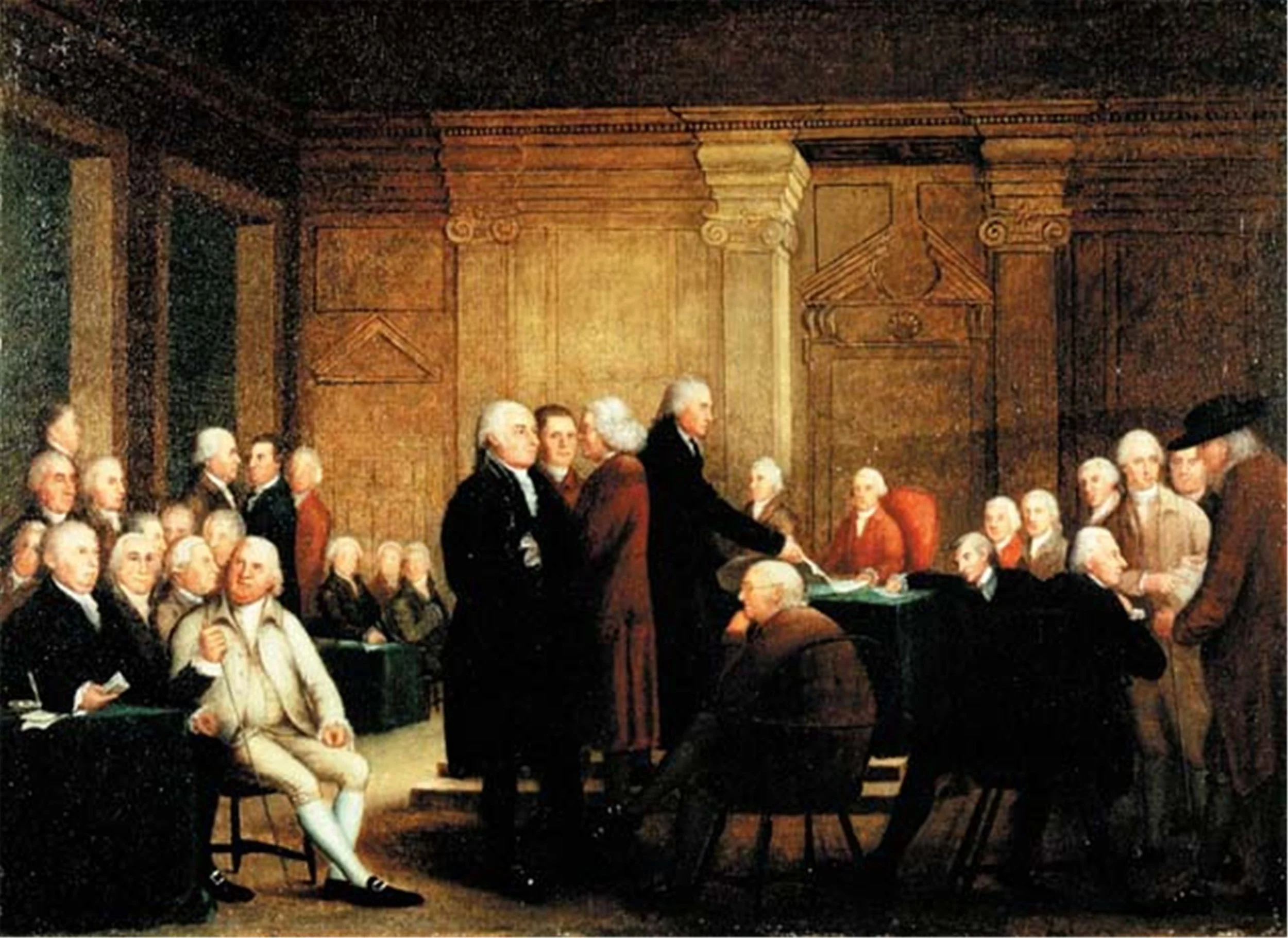
Portrait of Congress voting Independence by Jonathan Trumbull
A very similar occurrence took place in Philadelphia 2 months later when Thomas Jefferson was given the task of writing the rough draft of a declaration of independence with a smaller group of editors to finish the document to vote on it. In his initial draft, where he is listing the King’s many crimes against the colonies he said:
“He has waged cruel war against human nature itself,
violating its most sacred rights of life & liberty in the
persons of a distant people who never offended him, captivating
& carrying them into SLAVERY [my emphasis] in another
hemisphere or to incur miserable death in their transportation
thither.”
That passage was stricken, over Jefferson’s objections in the lengthy list of the Kings crimes. In his autobiography he would say many decades later, the colonies of Georgia and South Carolina required the paragraphs removal if they were going to sign on. He also said this about many of the representatives from northern colonies at that 1776 congress:
“Our Northern brethren also I believe felt a little
tender under these censures; for tho’ their people have
very few slaves themselves, yet they had been pretty considerable carriers of them to others.”
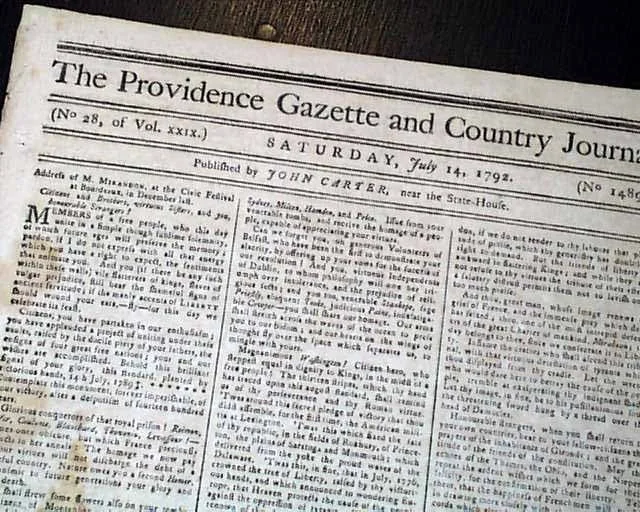
Photo of an edition of the Providence. Gazette, the voice in print of the rebellion in Rhode Island.
That was certainly true in Rhode Island [where enslavement factored into about 60% of RI’s pre-Revolutionary War economy) and may have been the same reason for the deliberate omission of the reference to slavery in the RI Renunciation Act.